
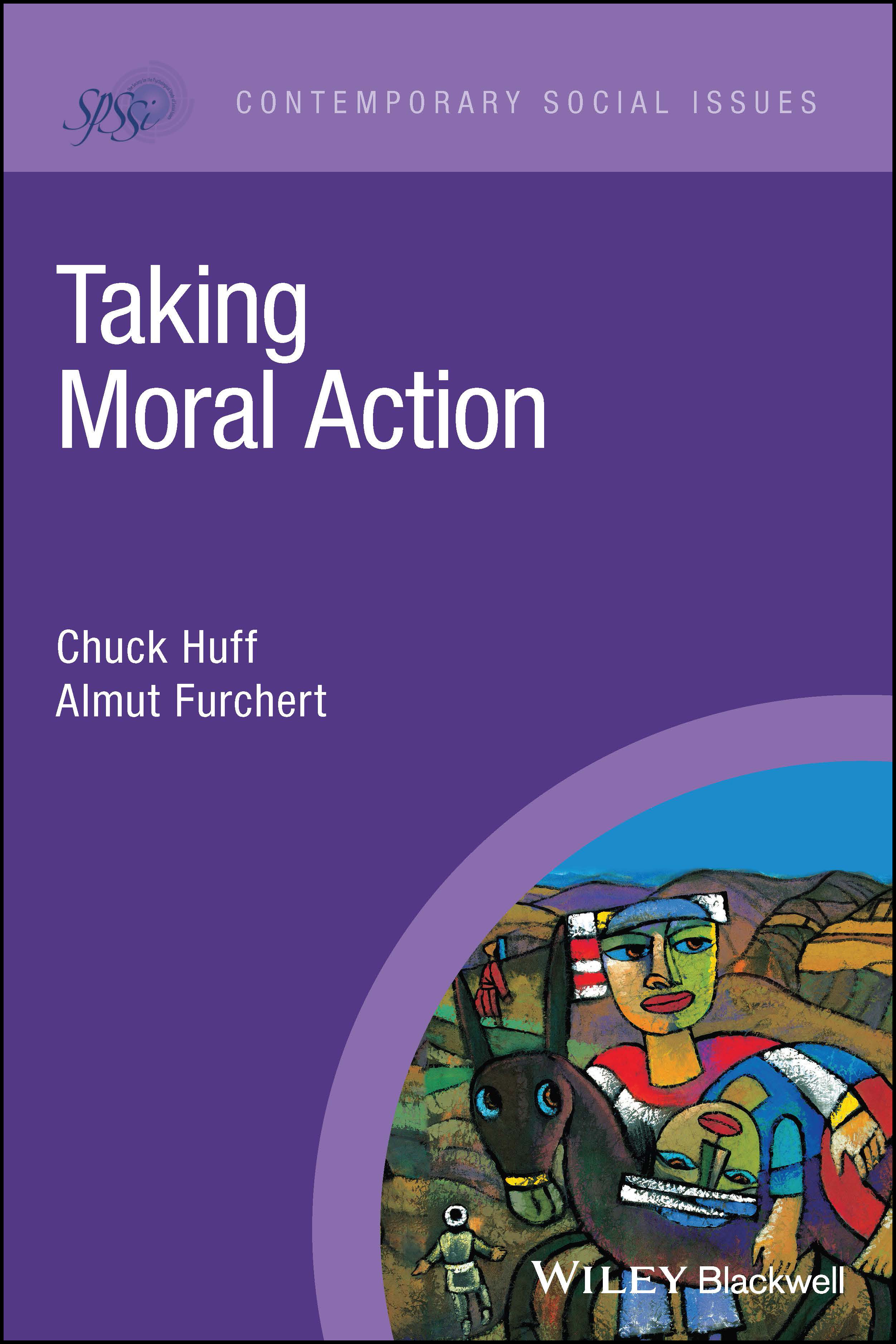
Taking Moral Action is coming to life.
The book is out, the reviews are in. And I am starting up the Taking Moral Action substack! Expect moral exemplar stories, reflections on moral psych, and work-in-progress.

Dear Readers,
After a long quiet spell following my retirement, I’m ready to revive Taking Moral Action—not just as a book, but as an ongoing conversation. So, I am excited you have already found your way here. Thank you for subscribing and also for your patience.
Some of you might have joined from my wife’s substack over at Cloister Notes or because you saw something interesting I posted on Notes. Wherever you came from and wherever you live, you are welcome here.
Before saying more about the book itself, first, a word about what this Substack is for.
Think of it as a space for thinking in public about moral action—before ideas are fully settled and after easy answers have failed. Some posts will grow directly out of the book. Others will explore questions the book left open. Some will be suggested by you. My aim is not to offer moral recipes, but to understand how moral action actually takes shape in real lives: through a shifting ecology of commitments, skills, emotions, institutions, and moments of recognition—sometimes aligned, sometimes in tension.
In the coming weeks, you’ll see:
Reflections on ideas from the book
Stories of moral exemplars—not as heroes with special traits, but as people navigating complex moral landscapes
Essays that explore what moral psychology tells us about how people recognize, resist, or rationalize both moral and immoral behavior
News
The book itself has been warmly received across disciplines. A few early reactions give the flavor:
Dan Perlman, Social Psychology, University of Winnipeg:
An erudite tour de force covering the range of contexts and processes influencing moral action.
Dan McAdams, Personality Psychology, Northwestern University:
I have never seen anything on this topic that is so broad and thorough.
John Davenport, Philosophy, Fordham University:
One of the most important works in moral psychology in two decades.
Christian Miller, Philosophy, Wake Forest University:
The most comprehensive and interdisciplinary treatment of moral psychology in decades.
Christian Miller also offered a thoughtful critical challenge in Notre Dame Philosophical Reviews, pressing us on the book’s claim that virtues themselves may not be what make us virtuous. That challenge has required me to bring together threads the book could only gesture toward. In April, I’ll be giving a talk at Penn State that pulls those threads together and that uses the resources of the book to help us understand both heroic virtue and unexpected moral failure. This Substack is where I’ll work through those questions more slowly, using concrete cases and lived experience rather than theory alone.
Since the book appeared, some of its ideas have begun to move into practice. This year, St. Olaf College received a grant through the Wake Forest Character Development Initiative, informed in part by the framework of Taking Moral Action. I’ll share reflections as that work unfolds—not as success stories, but as case studies in how moral ideals are taken up and reshaped within complex institutions and by individuals who differ widely in calling, capacity, and constraints.
I am also in the middle of an adult Sunday School 4-week series on moral myths. Last week was the first installment. Each one begins with exploring a myth (last week was “We become more moral by willpower”), followed by a Jesuit-inspired form of discernment. I will post the whole session when I expand my notes for it.
The questions that interest me most are rarely settled by expertise alone. They take shape through examples, disagreement, and the kinds of questions thoughtful readers ask when ideas meet real lives. I invite you to join in, to disagree, to offer examples and counter examples, and to enjoy thinking new thoughts about important things.
Thank you for being here at the beginning. I look forward to using this space to explore what moral action really looks like in our time, and to learning from the conversation that follows.
You don’t need to agree, or to be a specialist, to join the discussion. Questions, corrections, and disagreements are welcome; careful reasoning and compassion are encouraged. Citations are welcome, but not required; life experience is also a teacher. Simple questions can often be doors to complex matters. Feel free to introduce yourself and engage.
Let’s talk. Introduce yourself, tell us about your relevant interests, ask a question. What do you want to hear from me, or from other thoughtful folks?
If you’re new here, welcome. You can subscribe below to follow along as we explore what it means to take moral action—in research, in practice, and in daily life.
If you think someone else would be interested, do feel free to share the excitement of this new endeavor.