Taking Moral Action: A new framework for Moral Psychology.
A short Introduction

Welcome! This Substack is where I continue the work of my book, Taking Moral Action.
Each month I share chapter overviews, stories of moral exemplars, and reflections on current events in moral psychology. If you’re interested in how people become good — and how we sometimes fail — you’ll find it here.
What can psychological science tell us about morality? Some philosophers insist the official answer is “nothing,” as in “might does not make right.” But psychology can tell us about when people are good, and the reasons they give for it. And psychologists also study how people become good, how children and adults move from caring only about the self to including others, or even focussing on the good for others. This book is about all these things and more.1
The scientific literature on moral psychology is vast, scattered, and bewildering. In the public sphere, there is no end to advice, commentary, and simplistic moralizing about morality. Attempts to bring these two together have been fragmentary at best. Taking Moral Action is the first attempt to gather together the scattered threads of the research and weave them together into a framework that helps us to understand the science and also to apply it in the many places that moral formation occurs.
Through its integrative use of stories of moral action, our recent book "Taking Moral Action" grounds a broad and deep research overview with stories about the personal choices of individuals who take moral action. In doing so, it celebrates the wide variation in ways that people take moral action. And it connects the vast literatures it reviews by connecting them to the individual’s experience of moral success, failure, and self-critique.
Here are some comments on the book from psychologists and philosophers:
Dan Perlman, Social Psychology, U. Winnipeg: An erudite, tour de force covering the range of contexts and processes influencing moral action. It draws on multiple intellectual traditions (psychology, philosophy, religious studies) and offers penetrating insights and critical reflections on the literature in every chapter.
Dan McAdams, Personality Psychology, Northwestern U.: This is a remarkable book. I have never seen anything on this topic that is so broad and thorough. The level of detail is extraordinary.
John Davenport, Philosophy, Virtue Ethics, Fordham U.: A masterpiece, one of the most important works in moral psychology in two decades. It synthesizes insights from different fields all bearing on moral motivation and action in a broader way than I have ever seen before
The bulk of the book is a comprehensive and current (350+ page) re-framing and overview of empirical work in the psychology of morality that integrates literatures from empirical psychology, philosophy, and religious studies. If you want insight into how and why people act morally (or don't) this a both a guide and a comprehensive reference.
The final Moral Formation chapter concentrates, as Aristotle would have it, “not on what the good is, but on how we become good.” It integrates literature from 8 other topical chapters (plus an introduction and coda) that cover work in everything from evolution and neuroscience to cultural difference, including personality, the self, moral reason and moral emotion, and moral skills and expertise. There is no text anything like it as a one volume overview and reframing of the interdisciplinary field.
About the authors
The first author (Chuck Huff) is an American empirically minded social psychologist who has pursued applied ethical issues within the world of computing and software design. His work here has been to corral the wide-ranging literatures and organize and present them in a digestible fashion.
The second author (AF) is a practicing German philosopher and psychologist with expertise in existential, phenomenological, and hermeneutic traditions as well as in the intersection of continental philosophy and applied psychology. She came to the project mainly to offer some hermeneutical tools to better map the landscape of the field and bring some philosophical coherence to the categories and distinctions made in the text, creating the space in which the empirical focus of the text can stand.
Our approach
In the book, we use ideas from psychological theory, philosophy, and religion to help us think about the massive amounts of empirical research that has been generated in moral psychology. We try to point out findings that are agreed upon by most researchers, and also to highlight questions that still remain to be answered. When a finding or conclusion seems well-supported, we try to say so. But we also point out the limitations of our knowledge.
We are interested in exploring the moral wherever it can be found in human experience. Therefore, the stories of moral exemplars we present include both the famous and the obscure, and also individuals in politics and religion. This raises the issue of bias.2 Because the major religions have had thousands of years of interest in encouraging moral action, they are a good place to go to see practices that might cultivate goodness (and its spectacular collapse into failure). For the same reason, politics can serve as a proving ground for how practical corporate action is achieved in the service of the good (and of evil). We also draw from a large literature on corruption in corporations. And we look to studies of how surgeons, computer scientists, engineers, doctors, surgeons, social workers, and civil rights activists incorporate the good into their practices.
And we take all these sources and compare the insights and ideas that emerge from them to what one can find in the body of research in moral psychology. Weaving all these together has left us with more questions than conclusions, and there are many loose threads in the patterns we weave. But we try to document and sharpen the questions so they can benefit scientific researchers, philosophers, scholars of religion, and all those interested in how people take moral action.
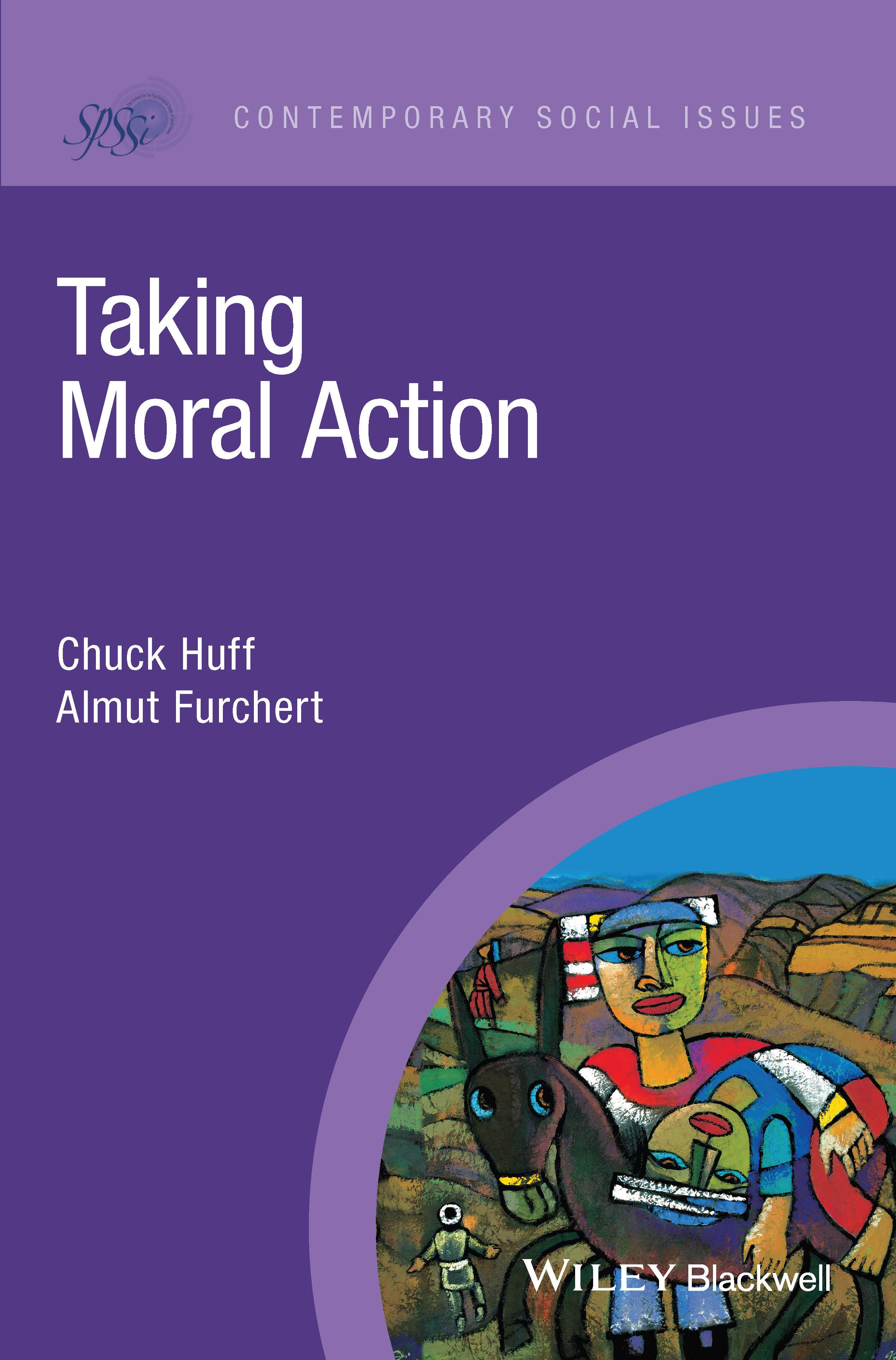
The picture on the cover is a painting by James He Qi, an award winning artist. He depicts the New Testament story by Jesus of the Good Samaritan. We chose this picture for multiple reasons. First, I suppose, is that it is the favorite bible story of our daughter. She often reenacts the story with impromptu drama. The background is the story, is another story, where Jesus uses the story to teach someone how to become a “neighbor” to others. So it is a story that encourages us to become good, based on the example of the Samaritan. Finally, my mentor, John Darley, did a classic experiment about the circumstances under which we are willing to do good, and titled the paper after the good Samaritan, From Jerusalem to Jericho.
What is bias, how do we identify it, and should we avoid it? You will find a great deal on bias in the chapters on Moral Reason and Moral Emotion. We conclude that both Reason and Emotion are sources of bias and of valid information. It requires skill and humility to tell when either is leading us astray (see the chapter on Skill & Expertise).